Sport Pilot Training in Van Nuys
Earn your Sport Pilot Certificate with as little as 20 hours of flight time under the FAA's expanded MOSAIC rules.
At American Aviation at Van Nuys, we want you to know that effective October 22, 2025, MOSAIC significantly expanded Sport Pilot privileges. Aircraft eligibility is now primarily governed by 14 CFR §61.316 rather than the former narrow light-sport aircraft definition.
20 hours
FAA airplane minimum
Age 17
Minimum certificate age
One passenger
Maximum passenger privilege
Day VFR
Night available with §61.329
14 CFR §61.313
Sport Pilot Minimum Requirements
- 20 total hours of flight time
- 15 hours of flight training with an authorized instructor
- 5 hours of solo flight training
- 2 hours of cross-country flight training
- 10 full-stop takeoffs and landings, each involving a traffic pattern
- One solo cross-country of at least 75 nautical miles total, with full-stop landings at two or more points
- At least one solo cross-country segment of 25 nautical miles straight-line distance
- 2 hours of practical-test preparation within the preceding 2 calendar months
20 hours is the FAA minimum. Many students require additional training to reach practical-test proficiency.
Age and Language
As you prepare for flight, keep in mind that under §61.305, an applicant must be at least 17 years old to earn airplane Sport Pilot privileges and must be able to read, speak, write, and understand English.
Knowledge and Practical Tests
To reach your goal, applicants need the required instruction and endorsements under §§61.307 and 61.313, must pass the Sport Pilot knowledge test, and must pass the practical test with an FAA examiner or authorized designee. Completion is based on proficiency, not a promise of exactly 20 hours.
§§61.309 and 61.311
What Sport Pilot Training Covers
FAA Knowledge Areas
- Sport Pilot regulations, limitations, and NTSB reporting
- FAA publications, VFR charts, pilotage, dead reckoning, and navigation systems
- Weather reports, forecasts, hazardous weather, windshear, and density altitude
- Collision avoidance, wake turbulence, aerodynamics, stalls, and spin awareness
- Aircraft systems, powerplants, performance, weight and balance
- Aeronautical decision making, risk management, and preflight planning
- Runway lengths, takeoff and landing performance, fuel, and alternate planning
Flight Proficiency
- Preflight preparation and procedures
- Airport and tower operations
- Takeoffs, landings, and go-arounds
- Performance and ground-reference maneuvers
- Navigation and cross-country procedures
- Slow flight, stalls, and emergency operations
- Post-flight procedures
The post-MOSAIC aircraft envelope
MOSAIC Dramatically Expanded What Sport Pilots Can Fly
Understanding your aircraft is vital: Section 61.316 replaced the former blanket weight limit with performance and design criteria. An eligible airplane must have had, since original certification, a VS1 no greater than 59 knots calibrated airspeed at maximum certificated takeoff weight and the most critical center of gravity.
No more than four certificated seats
A non-pressurized cabin, if equipped
No turbojet powerplant
Design compatible with §61.316
Fixed gear unless the §61.331 endorsement is obtained
Fixed, ground-adjustable, or automatic-pitch propeller unless the §61.331 manual-pitch endorsement is obtained
Can a Sport Pilot fly a four-seat airplane?
Yes, if that airplane separately satisfies §61.316. The airplane may have four seats, but a Sport Pilot remains limited to carrying one passenger.
Can Sport Pilots train in a Cessna 172?
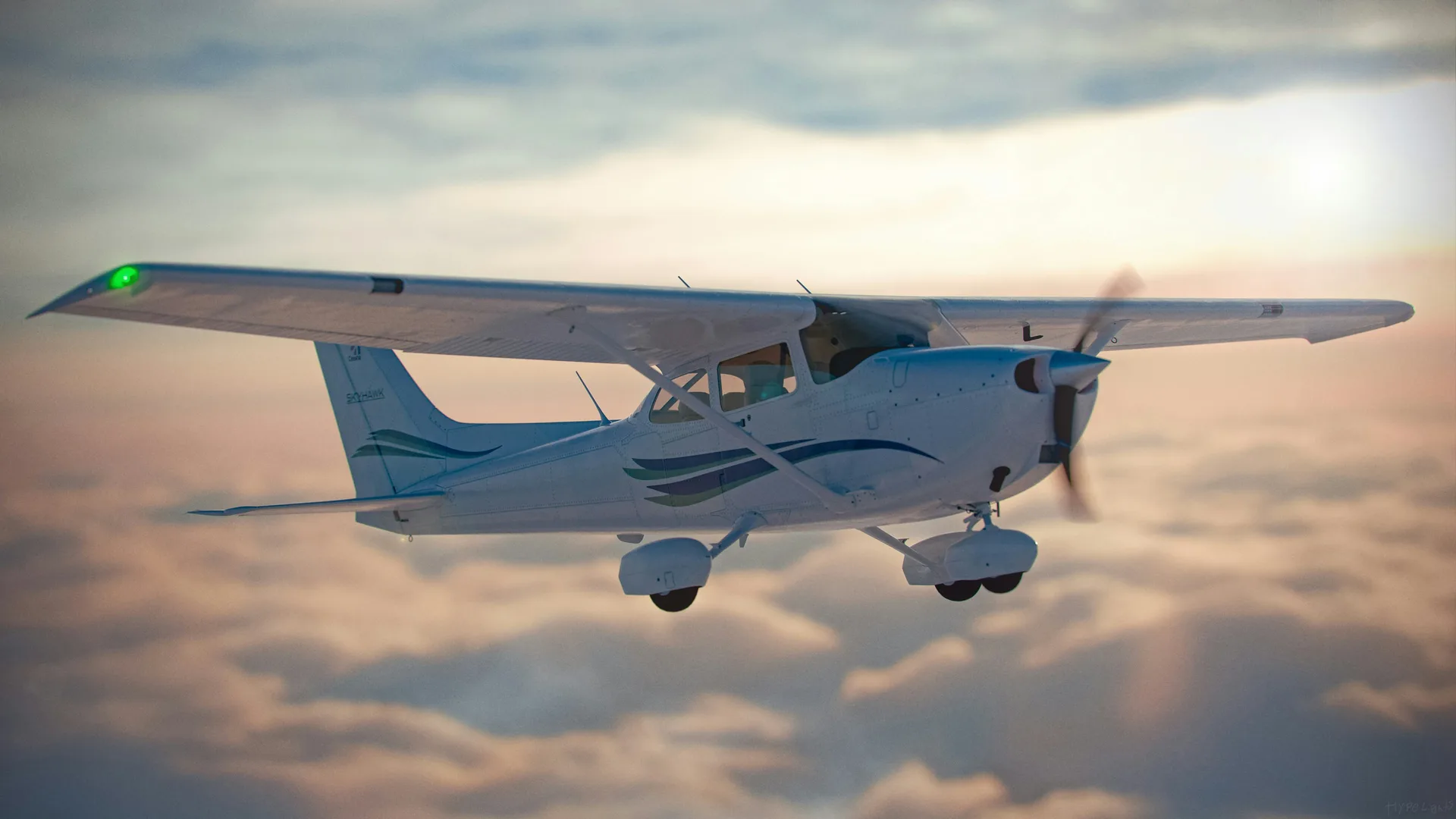
MOSAIC has opened training to a broader range of familiar airplanes at our facility. Eligibility depends on the particular model and configuration meeting §61.316; not every Cessna 172 automatically qualifies.
Controlled airspace
Can a Sport Pilot Fly at Van Nuys and in Class B, C, or D Airspace?
Yes, after receiving and logging the training and endorsement required by §61.325. Training at Van Nuys gives Sport Pilot students practical experience in a busy tower-controlled Class D environment, but the endorsement is not automatic.
Our thorough training covers radio communications, navigation facilities, radar services, tower operations, ATC clearances, applicable Part 91 rules, and at least three full-stop takeoffs and landings at a towered airport, each involving a traffic pattern.
Student solo is a separate rule
For your safety, a student seeking a Sport Pilot certificate must use §61.94—not §61.95—for solo privileges in Class B, C, or D airspace or at a towered airport. Sections 61.87 and 61.89 also apply.
- A satisfactory pre-solo knowledge test covering applicable Parts 61 and 91, local airspace procedures, and aircraft operating limitations
- Required pre-solo flight training, demonstrated proficiency, and a current instructor endorsement for the specific make and model
- Training in radios, communications, navigation facilities, radar services, tower operations, Part 91 rules, and ATC clearances
- Three full-stop takeoffs and landings at a towered airport
- Specific training for the airspace area and airport where solo privileges will be used
- The required solo and controlled-airspace endorsements, renewed within the applicable 90-day periods
Expanded Endorsements Under MOSAIC
§61.327
Higher-Speed Aircraft Endorsement
We emphasize that operating an aircraft with VH greater than 87 knots CAS requires ground and flight training in that speed range and an instructor proficiency endorsement. A separate endorsement structure applies at 87 knots CAS or less.
§61.331
Retractable Landing Gear
A Sport Pilot may use retractable gear after satisfying applicable §61.31(e) complex-airplane requirements or completing the specific ground and flight training and proficiency endorsement in §61.331.
§61.331
Manual Controllable-Pitch Propeller
Manual controllable-pitch operation requires the applicable complex training or specific ground and flight training plus a proficiency endorsement.
§61.329
Sport Pilots Can Now Earn Night Privileges
Night privileges at American Aviation require three hours of night training, a night cross-country with a landing at least 25 nautical miles away, ten night takeoffs, ten full-stop night landings, an instructor endorsement, and qualifying medical or BasicMed-style status.
14 CFR §61.23
Medical Requirements
Many Sport Pilots can qualify using a valid U.S. driver's license instead of maintaining a traditional FAA medical certificate, subject to FAA eligibility requirements.
Please note that the pilot must follow driver's-license restrictions, must not have a disqualifying prior FAA medical outcome, and must not know of a medical condition that would make operation unsafe. Driver's-license-only qualification does not by itself satisfy the new night privilege.
14 CFR §61.315
Passengers and Cost Sharing
A Sport Pilot may carry one passenger. The pilot may share allowable operating expenses with that passenger but must pay at least half. Allowable shared expenses include fuel, oil, airport expenses, and aircraft rental fees.
Sport Pilot is primarily a recreational and personal-flight certificate.
Major Sport Pilot Limitations
Sport Pilot vs. Private Pilot
We remind students that Sport Pilot is not half of a Private Pilot certificate. It is a separate FAA certificate with a lower minimum training requirement and narrower operating privileges.
| Comparison | Sport Pilot | Private Pilot |
|---|---|---|
| FAA airplane minimum | 20 hours | Generally 40 hours under Part 61 |
| Passengers | One passenger maximum | Broader passenger privileges |
| Aircraft | Must satisfy §61.316 | Broader aircraft privileges |
| Night | Available after §61.329 requirements | Night training included in certificate requirements |
| Medical pathway | Driver's-license option may be available | Medical or BasicMed depends on the operation |
| Controlled airspace | §61.325 endorsement required | No separate Sport Pilot endorsement |
| Compensation or hire | Not permitted | Separate Commercial privileges required |
Why train at Van Nuys
Real-World Southern California Airspace Experience
Flight instruction at Van Nuys includes practical experience with tower communications, Class D operations, nearby Class B and C airspace, and the pace of a busy Los Angeles-area airport. Sport Pilot, Private Pilot, Instrument, and Commercial training are available.
MOSAIC effective dates
The Sport Pilot portions of the FAA MOSAIC final rule became effective October 22, 2025.
The separate light-sport aircraft certification and manufacturing provisions became effective July 24, 2026.
Sport Pilot Training FAQ
What is the minimum flight time for a Sport Pilot certificate?
For airplane single-engine land or sea privileges, the FAA minimum is 20 hours under 14 CFR §61.313. Actual completion time depends on proficiency and may be higher.
Can I become a Sport Pilot without an FAA medical?
Many applicants may use a valid U.S. driver's license instead of maintaining a traditional FAA medical certificate, subject to the eligibility conditions in 14 CFR §61.23. A prior medical denial, suspension, revocation, withdrawn Special Issuance, or a known unsafe medical condition can affect eligibility.
Can a Sport Pilot fly a Cessna 172?
MOSAIC opened Sport Pilot privileges to many more conventional training airplanes, but the specific model and configuration must satisfy 14 CFR §61.316, including the 59-knot VS1 limit and other design requirements.
Can a Sport Pilot fly a four-seat airplane?
Yes, if the airplane independently satisfies §61.316. The Sport Pilot may still carry no more than one passenger.
Can a Sport Pilot fly at Van Nuys Airport?
Yes, after the applicable controlled-airspace and tower training and endorsement under §61.325. Student solo operations have separate §61.94 requirements.
Can Sport Pilots fly in Class B airspace?
Yes, after the applicable §61.325 training and endorsement. Student Sport Pilot solo privileges have additional, location-specific requirements under §61.94.
Can a Sport Pilot fly at night?
Yes, after satisfying §61.329, including three hours of night training, the required night cross-country and takeoffs and landings, an instructor endorsement, and the applicable medical or BasicMed-style qualification.
Can a Sport Pilot carry passengers?
A Sport Pilot may carry one passenger. A four-seat eligible airplane does not increase that passenger limit.
Can a Sport Pilot fly retractable-gear airplanes?
Yes, if the aircraft otherwise satisfies §61.316 and the pilot obtains the applicable §61.331 endorsement or qualification.
Did MOSAIC eliminate the Sport Pilot aircraft weight limit?
MOSAIC removed the former prescriptive Sport Pilot aircraft weight limit. Section 61.316 now uses aircraft performance and design criteria instead.
How long does Sport Pilot training take?
The regulatory airplane minimum is 20 hours, but actual time depends on training frequency, weather, proficiency, aircraft availability, and scheduling.
Find Out Whether Sport Pilot Fits Your Flying Goals
Our instructors are happy to help you compare Sport Pilot and Private Pilot training based on the airplane you want to fly, the passengers you want to carry, your medical pathway, and where and when you want to operate.
Contact Flight TrainingThe school reports the regulatory basis as: 14 CFR §§61.23, 61.87, 61.89, 61.94, 61.303, 61.305, 61.307, 61.309, 61.311, 61.313, 61.315, 61.316, 61.325, 61.327, 61.329, and 61.331; FAA MOSAIC final rule; FAA AC 61-146; and current FAA Sport Pilot guidance.