
Decades of experience and trust
American Aviation says it operates the oldest continuously operating aircraft-maintenance facility at Van Nuys Airport.
Aircraft maintenance · KVNY
Explore areas of aircraft maintenance to discuss with American Aviation at Van Nuys Airport. Each aircraft and task is evaluated individually; listed services are not a blanket promise of availability.
American Aviation says it operates the oldest continuously operating aircraft-maintenance facility at Van Nuys Airport.
The company aims to provide the lowest-cost maintenance in Los Angeles, Burbank and Van Nuys. Each estimate depends on the aircraft and agreed scope; this is company-stated positioning, not an independent survey.
Applicable rules depend on aircraft operation, installed equipment and records. Use current FAA regulations and aircraft-specific data; a general service description is not a compliance determination.
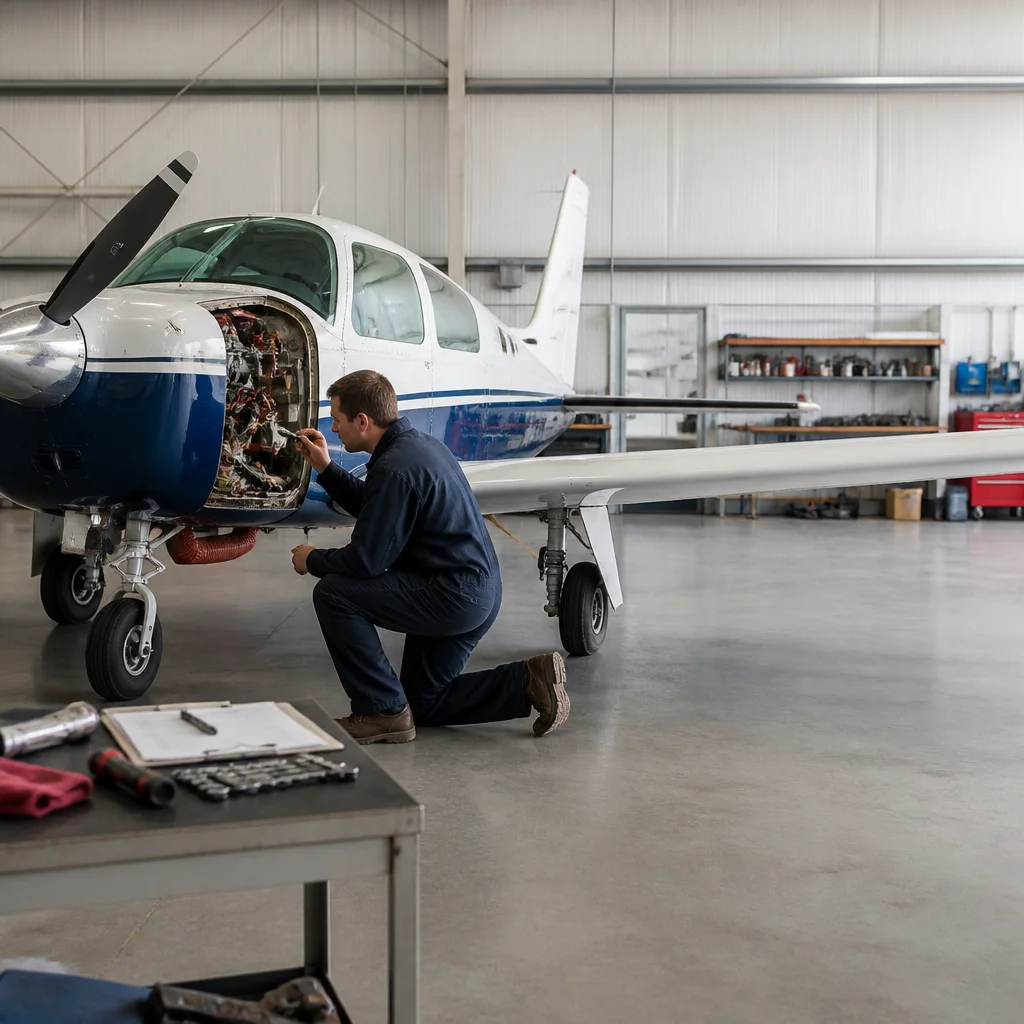
How to request an estimate
Share your aircraft make, model, serial number, meter reading, records and the concern or work requested. A maintenance estimate requires aircraft-specific review and a defined scope.
Request a maintenance estimate01 / SERVICE GROUP
Inspection events are governed by aircraft use, current rules, manufacturer information and the individual aircraft's records. Annual and 100-hour inspections use Appendix D scope with a §43.15 checklist; they are not interchangeable with every scheduled service. AD applicability and inspection status require aircraft-specific research. A pre-purchase inspection is separately scoped and is not automatically an annual or a guarantee.
For most aircraft subject to 14 CFR 91.409, an annual inspection is required within the preceding twelve calendar months; specified exceptions and approved alternative inspection programs can apply. The inspection examines the applicable airframe, engine and equipment using Appendix D scope, an appropriate checklist and current maintenance data. An IA holder or another appropriately authorized organization provides the required inspection authority. Owners should supply complete records, current times and known discrepancies. Inspection findings, corrective work and the return-to-service determination are separate matters, not a promise that every aircraft will pass.
The 100-hour requirement under 14 CFR 91.409 applies to qualifying operations carrying persons other than crewmembers for hire, or instruction for hire in an aircraft provided by the person giving instruction. Rental alone, or every instructional flight, does not automatically establish applicability. Discuss the operating arrangement, current aircraft time and the last qualifying inspection with appropriately authorized maintenance personnel. Applicable inspection scope, records and aircraft-specific data guide the work. An annual can meet the applicable 100-hour requirement; a 100-hour inspection does not automatically replace an annual.
The 50-hour inspection is an intermediate service interval often recommended by manufacturers to maintain engine reliability and operational safety. This maintenance focus typically includes oil changes, filter inspections, and a review of high-wear components. While not a universal FAA mandate, adhering to these intervals is crucial for proactive symptom identification and trend analysis. Utilizing manufacturer-approved procedures and skilled technicians ensures that minor issues are identified before they require costly repairs, thereby supporting the overall health and longevity of the aircraft's power plant.
Applicable Airworthiness Directives are legally enforceable requirements addressing unsafe conditions in specified aircraft, engines, propellers or appliances. Applicability depends on the directive, configuration and identifying information; timing, recurring actions and permitted compliance methods must be read carefully. Owners should provide complete records, serial numbers, installed equipment and previous compliance entries. Appropriately authorized personnel evaluate the current requirements and document applicable work. A general statement that ADs have been checked is not a substitute for a traceable compliance assessment, and future recurring obligations still need tracking.
Service Bulletin compliance involves executing recommended updates or modifications provided by the aircraft manufacturer to improve reliability, performance, or safety. While generally advisory under Part 91, they may become mandatory if integrated into an Airworthiness Directive. Evaluating these bulletins requires careful analysis of the aircraft's configuration and maintenance history. Competent technicians assess the relevance of each bulletin to the specific serial number, ensuring that all work is performed according to current manufacturer specifications, which ultimately supports the aircraft's long-term value and operational safety.
An aircraft airworthiness inspection is a focused review performed to verify that the vehicle conforms to its type design and is in a condition for safe flight. This process often precedes specific FAA certifications or return-to-service requirements. Technicians examine maintenance logs, equipment lists, and hardware against original data to ensure every system functions as intended. Expert assessment is essential to confirm that all modifications are properly documented and that the aircraft adheres to all regulatory standards necessary to maintain its legal flight status.
A pre-purchase inspection helps a prospective buyer understand observed condition, records and possible maintenance concerns before committing to an aircraft. Agree on the scope with the inspecting professional, including the systems, accessible areas, logbooks and AD history to be reviewed. Corrosion, prior repairs and missing records may warrant further investigation using applicable aircraft data. This evaluation is not automatically an annual inspection, an airworthiness certification, a warranty or a prediction of every future expense. Findings and limitations should be discussed before deciding whether further inspection or specialist review is needed.
A comprehensive logbook review involves auditing an aircraft's maintenance history to verify the continuity and accuracy of all required inspections, AD compliance, and major repairs. This review helps identify record gaps and applicable requirements; it is not proof that every historical event was documented or an independent certification of airworthiness. Trained professionals examine records for gaps or inconsistencies that could affect airworthiness or resale value. Accurate, well-organized logbooks are vital for demonstrating compliance during inspections and providing peace of mind regarding the historical safety and maintenance standards of the aircraft.
02 / SERVICE GROUP
Scheduled and unscheduled work begins with aircraft identity, operating history and the owner or pilot's report. Maintenance is carried out using applicable technical data, required privileges, appropriate tools and a defined authorization. A newly discovered discrepancy can affect the scope, parts and schedule; findings should be discussed and documented rather than hidden inside a generic estimate.
Preventive maintenance refers to specific, limited tasks allowed under FAA regulations that owners may perform, provided the work does not involve complex disassembly. Examples include oil changes or tire replacements. Despite the simplicity of these tasks, utilizing appropriate manufacturer data and following proper procedures is essential to ensure safety. Documentation of these tasks in the maintenance logs remains a regulatory requirement. Qualified oversight or guidance ensures that even routine actions contribute positively to the aircraft's airworthiness without compromising its structural or operational integrity.
Scheduled maintenance encompasses routine tasks performed at predefined intervals to prevent component fatigue and failure. This program is tailored to the specific aircraft model, utilizing manufacturer-recommended guidance to address systems like flight controls, electrical, and propulsion. Consistent adherence to these intervals, performed by qualified personnel, helps manage mechanical degradation effectively. Proper recording of all scheduled activities provides a reliable history of the aircraft's condition, which is instrumental in maintaining high standards of safety and ensuring long-term reliability for all flight operations.
Unscheduled maintenance is required when unforeseen mechanical or structural issues arise, potentially affecting the aircraft's immediate airworthiness. This service addresses component failures, leaks, or performance abnormalities discovered during pre-flight checks or normal operation. Qualified technicians rely on the manufacturer's troubleshooting data to pinpoint the root cause and implement corrections. Prompt, professional intervention is vital to restore the aircraft to a safe operating state, ensuring that all repairs meet rigorous regulatory standards before the pilot returns the machine to service.
Troubleshooting and repair involve systematic analysis of complex mechanical or electronic issues to isolate the failure point and restore normal function. This process requires a deep understanding of the aircraft's systems and strict adherence to manufacturer-approved fault isolation procedures. Qualified personnel use diagnostic tools to distinguish between component failure and secondary symptoms, ensuring that the repair addresses the underlying problem. Accurate diagnostics, documented according to FAA regulations, prevent unnecessary part replacement and ensure that the aircraft is returned to a reliable and safe condition.
Squawk diagnosis and repair focuses on addressing specific pilot-reported discrepancies that impact the comfort or operation of the aircraft. Technicians evaluate each reported symptom, from minor instrumentation glitches to structural vibrations, to determine the underlying cause. Differentiating between cosmetic issues and safety-critical malfunctions is essential for an effective repair. Using authorized data and qualified expertise ensures that every squawk is resolved appropriately, maintaining the integrity of the aircraft's systems while providing the pilot with clear, verified results after the maintenance is completed.
Maintenance consultation provides owners with expert guidance on the long-term health, regulatory requirements, and strategic planning for their aircraft. Whether planning for engine overhauls, avionics upgrades, or navigating complex AD requirements, professional advice ensures that decisions are aligned with FAA regulations and manufacturer best practices. This service helps owners prioritize maintenance spending and understand the impact of various upgrades on airworthiness. Access to experienced technical knowledge ensures that the aircraft is managed proactively rather than reactively, supporting sustained safety and reliability.
Lubrication service is a fundamental maintenance task designed to protect moving parts from excessive friction, wear, and corrosion. This service involves applying approved lubricants to flight control hinges, engine linkage, and other specified grease points according to the manufacturer's maintenance manual. Ignoring lubrication can lead to premature mechanical failure and control binding. Qualified technicians perform these tasks precisely to ensure that every critical area receives the correct type and amount of lubricant, which is essential for maintaining smooth, safe operation of the aircraft systems.
03 / SERVICE GROUP
Piston-engine health is assessed from multiple observations interpreted together: operating history, manufacturer information, symptoms, compression, borescope observations, oil or filter evidence and the condition of related systems. One test result cannot provide a complete diagnosis. This catalog describes owner-facing maintenance inquiries and does not claim that specialized engine overhaul is performed in-house.
Engine removal and replacement is a major service involving the exchange of the aircraft's power plant with a new or overhauled unit. This complex procedure requires strict adherence to manufacturer instructions to ensure proper mounting, alignment, and systems connectivity. Qualified personnel are essential to verify that all hoses, control cables, and electrical wiring are secured according to rigorous safety standards. Following a successful installation, thorough operational testing and careful documentation are required to confirm that the engine meets all airworthiness standards for service.
Engine troubleshooting involves identifying the source of performance issues like rough running, power loss, or high temperatures. Technicians analyze engine data, including compression tests and ignition system performance, to isolate faulty components. It is critical to interpret these findings within the context of current trends rather than relying on isolated measurements. Qualified personnel follow manufacturer-approved diagnostic charts to pinpoint failures accurately, ensuring that repairs are effective. Professional attention to detail during this process is vital for ensuring engine safety and restoring performance.
Engine maintenance includes a variety of tasks such as oil changes, ignition timing checks, and accessory inspections aimed at maximizing the power plant's service life. By following manufacturer-specified protocols and utilizing qualified technicians, owners can detect early signs of wear or internal issues. Proper record-keeping for every maintenance activity is necessary to track the engine's health over time. Diligent care and adherence to technical data ensure that the engine operates safely and reliably, reducing the risk of catastrophic failure during flight.
Engine compression testing evaluates cylinder health by measuring the pressure retention within the combustion chamber. Technicians use calibrated equipment to identify symptoms like rough idling, power loss, or excessive oil consumption. Comparing these readings against manufacturer specifications and engine historical trends is vital for airworthiness assessments. Since interpretation relies on specific test conditions and environmental factors, this data must be analyzed by qualified personnel using FAA-acceptable data to determine if further diagnostic actions or mechanical interventions are necessary for safe operation.
Borescope inspections provide a visual assessment of internal engine components, including cylinder walls, valves, and pistons. This procedure helps identify common findings such as carbon buildup, scoring, or valve burning before they manifest as flight performance issues. By referencing the engine maintenance manual, qualified technicians can interpret these findings against established wear limits. Using FAA-approved data and specialized training ensures the inspection accurately evaluates internal conditions, supporting the long-term reliability and safety of the aircraft power plant throughout its operational life.
Oil and filter changes are fundamental preventive maintenance tasks that remove contaminants and debris from the lubricating system. Frequent oil analysis helps identify abnormal metallic wear, which can indicate premature component failure. Qualified personnel must perform these tasks following manufacturer-specific intervals and approved data to ensure the correct viscosity and additives are used. Proper record-keeping of these services confirms compliance with maintenance schedules and is essential for monitoring the mechanical integrity of the engine over successive operational hours.
Oil filter inspection involves cutting the filter housing to examine the element for captured contaminants or metallic particles. This procedure serves as a diagnostic indicator of internal engine health, allowing for the early detection of bearing failure or cylinder wear. Qualified technicians evaluate findings against established trends in the aircraft logbooks to differentiate between normal break-in wear and concerning material deposits. Utilizing FAA-acceptable service practices ensures that these findings are documented and addressed correctly according to the specific manufacturer maintenance requirements.
04 / SERVICE GROUP
Ignition and fuel-delivery complaints can share symptoms such as rough running, difficult starting or uneven operation. A mechanic identifies the installed system and follows the applicable data to inspect the relevant parts, connections and evidence. Fuel-system concerns require qualified, aircraft-specific attention; this overview is not a troubleshooting procedure for owners to perform.
Spark plug service involves cleaning, inspecting, and testing ignition components to ensure reliable combustion. Symptoms like fouled plugs or increased magneto drop during run-up often necessitate this maintenance. Qualified personnel examine the electrodes for wear, burning, or cracking, ensuring they meet the manufacturer’s service life specifications. By following proper gap settings and torque requirements defined in FAA-approved data, technicians maintain ignition efficiency and overall engine performance, which is critical for preventing misfires and protecting the internal combustion environment during every flight phase.
Magneto inspection and timing ensures the ignition system delivers a precise spark for optimal engine efficiency. Technicians check the internal magneto components for wear and verify timing alignment according to the manufacturer’s specific engine model requirements. Improper timing can lead to symptoms such as erratic engine performance, difficult starting, or high cylinder head temperatures. Given the safety-critical nature of engine ignition, qualified personnel must use FAA-accepted procedures to verify timing, ensuring the engine operates within prescribed parameters for maximum reliability and safety.
Ignition system service covers the comprehensive health of magnetos, ignition leads, and the starting circuitry. This service addresses common issues such as high-resistance leads or worn distributor blocks that can cause engine surges or power loss. Qualified personnel assess the system using manufacturer-provided maintenance data to ensure all components meet electrical and safety standards. Because ignition performance directly impacts engine reliability, relying on appropriately trained technicians to evaluate the entire system configuration is necessary for maintaining consistent performance and flight safety.
Fuel system troubleshooting involves diagnosing flow, pressure, and leakage issues within the aircraft's fuel delivery network. Common symptoms include fluctuating fuel pressure, rich or lean running conditions, or audible evidence of leaks during ground checks. Qualified personnel must follow manufacturer instructions and FAA-acceptable data to safely isolate and resolve these issues. Because fuel components are critical to engine operation, professional intervention ensures that all repairs maintain the integrity of the system, preventing fuel starvation or hazardous conditions during critical flight operations.
Carburetor service involves assessing the mechanical integrity of the mixture control, float chamber, and idle circuits to maintain accurate fuel-air ratios. Symptoms like rough idling, hesitation during acceleration, or carb ice susceptibility require technical review. Qualified personnel use manufacturer documentation to adjust or troubleshoot these components, ensuring they meet safety and performance standards. Proper maintenance is essential for consistent engine power, and using qualified technicians ensures that all adjustments comply with FAA-acceptable data, preventing lean/rich imbalances that threaten engine longevity.
Fuel injection system service focuses on maintaining the precise delivery of fuel to each cylinder for efficient combustion. This involves checking fuel pressures, flow dividers, and injector nozzles for blockages or performance degradation. Symptoms like uneven cylinder temperatures or rough engine operation often indicate a need for professional diagnostics. Qualified personnel must perform these tasks using approved maintenance manuals, as precise fuel metering is vital to prevent engine damage. Professional attention ensures the system functions reliably within specified operational tolerances.
05 / SERVICE GROUP
Exhaust leaks and electrical faults deserve careful evaluation because symptoms can be subtle or intermittent. Inspection may consider security, condition, visible heat effects, wiring, connections, charging and installed equipment as appropriate. General aircraft electrical service is not the same as avionics bench repair, which is not represented here as an in-house capability.
Exhaust system inspections identify signs of corrosion, cracks, or loose components that can lead to hazardous exhaust leaks or engine compartment fires. Because carbon monoxide contamination in the cabin is a significant safety risk, this inspection is critical. Qualified personnel perform detailed checks for structural integrity using manufacturer-approved service data. Given the high-temperature environment of the exhaust, professional evaluation is required to ensure that all patches, replacements, or repairs adhere to safety standards, maintaining the containment of hot gases throughout operation.
Electrical troubleshooting involves identifying the source of system failures or intermittent behavior, such as instrument flickering or circuit breaker trips. Technicians use wiring diagrams and multimeters to isolate faults in complex systems. Because electrical issues can escalate into smoke or fire, qualified personnel must adhere to strict manufacturer and FAA standards for repair and documentation. Ensuring that all troubleshooting follows established technical data prevents improper modifications and maintains the airworthiness of the aircraft’s avionics, lighting, and engine management electrical paths.
Electrical system repairs focus on restoring the integrity of wiring, switches, and circuit protection components. This service addresses common wear issues like degraded insulation, loose terminal connections, or faulty connectors found during regular inspections. Qualified personnel perform repairs according to approved technical data to ensure that replacements are airworthy and do not introduce new hazards. Work by appropriately authorized personnel using applicable maintenance data supports the safety of the electrical architecture, which supports everything from engine starting systems to essential flight instrument navigation displays.
Battery service involves testing, cleaning, and inspecting the battery and its box for security, electrolyte levels, and terminal corrosion. An improperly maintained battery can lead to starting failures or erratic electrical system performance. Qualified personnel evaluate the battery capacity against manufacturer specifications to ensure it can provide necessary emergency power if the charging system fails. Adhering to professional service standards is critical for the reliable function of the aircraft's electrical load, especially during high-demand phases like engine starting or instrument operation.
Starter and alternator service ensures these critical electrical components can effectively turn the engine and maintain system voltage. Symptoms such as slow cranking or weak charging output indicate potential wear or failure. Qualified technicians inspect these units for physical integrity, electrical output stability, and connection security per the manufacturer's maintenance manual. Using FAA-accepted data for testing and servicing ensures that these systems remain reliable. Professional oversight prevents catastrophic failures that could strand an aircraft or cause critical power loss during flight.
06 / SERVICE GROUP
Wheel, tire and brake condition affects ground handling and is influenced by aircraft configuration and operating cycles. Assessment may consider wear, leakage, damage, bearings, lines and adjacent landing-gear components. Wear criteria, materials and maintenance procedures depend on the actual parts and controlling aircraft or component instructions.
Brake service addresses the maintenance of calipers, linings, and discs to ensure reliable ground handling and stopping performance. Common symptoms like spongy pedals, uneven braking, or dragging signify a need for inspection. Qualified personnel monitor lining wear and fluid integrity according to manufacturer specifications to ensure braking efficiency. Because ground control is essential for safe taxiing and landings, performing this service using FAA-acceptable practices is mandatory. Proper maintenance ensures that the landing gear system remains responsive, safe, and fully operational during every mission.
Tire replacement is a critical task performed when tread wear or structural damage reaches established service limits. Technicians evaluate tires for flat spots, sidewall weather cracking, or cord exposure that could lead to failure under landing loads. Qualified personnel ensure the correct tire specifications and inflation pressures are matched to the aircraft's weight requirements using manufacturer-approved data. Proper installation and inspection are necessary to prevent blowouts and ensure safe directional control during takeoffs, landings, and high-speed taxiing on the runway surface.
Wheel and bearing service includes cleaning, inspecting for corrosion or cracks, and repacking bearings with approved grease to prevent friction and failure. Worn or improperly adjusted bearings can lead to wheel lockup or detachment, posing a severe safety risk. Qualified personnel must follow manufacturer maintenance procedures and torque values to ensure proper operation. This service is vital for smooth ground handling and overall landing gear safety, relying on expert assessment to confirm that all wheel assemblies are airworthy and safe for use.
Landing gear inspections focus on structural integrity, shock strut condition, and proper retraction system operation. Common findings include fluid leaks, worn bushings, or evidence of excessive stress. Technicians verify compliance with manufacturer maintenance manuals and service bulletins. Proper maintenance ensures safe ground operations and protects the airframe from damage during landing. Utilizing appropriately qualified personnel to perform these checks according to approved data is essential for maintaining airworthiness and ensuring the landing gear functions reliably throughout its required service life.
07 / SERVICE GROUP
Control-system inspection considers freedom of movement, condition, security, routing and wear in the installed system. Hinges, cables, pulleys, bellcranks, tubes, rod ends and travel or tension are evaluated only as appropriate to the aircraft. Actual limits and rigging specifications come from applicable manufacturer data.
Flight control inspection and rigging ensure that control surfaces move accurately and within manufacturer specified tolerances. Symptoms such as binding, excessive free play, or asymmetric response often necessitate a detailed assessment. Mechanics use current manufacturer data to check cable tension, push-pull rod settings, and stop adjustments. This process is vital for predictable aircraft handling and safety. Expert technical oversight ensures that rigging adjustments remain within certified aerodynamic limits, preventing potential loss of control or degraded flight characteristics during critical maneuvers.
Control cable inspections evaluate integrity for fraying, corrosion, or incorrect tension levels. These cables are critical to flight safety, as they transmit pilot inputs directly to control surfaces. Findings may include broken wire strands or evidence of rubbing against airframe structure. Qualified personnel apply manufacturer guidance to measure tension and assess wear, ensuring that cables meet minimum service standards. Rigorous inspection protocols protect the system from failure, confirming that all flight controls operate smoothly and remain responsive in all flight envelopes.
08 / SERVICE GROUP
Cabin refurbishment should consider more than appearance. Aircraft materials and installation must be suitable for the aircraft, and work must not interfere with controls or equipment or affect primary structure. Some limited upholstery or decorative repairs may fit Part 43 Appendix A preventive-maintenance provisions; broader work can require different data and documentation.
Interior repairs focus on restoring cabin components, including panels and trim, while maintaining essential structural access. It is vital to ensure that repairs do not obstruct emergency exits or flight control paths. Technicians evaluate materials for compliance with FAA flammability requirements for cabin interiors. Professional repair processes ensure that all cabin elements remain secure, preserving both the aesthetic quality of the aircraft and the integrity of the safety equipment. Qualified maintenance ensures that all modifications meet regulatory airworthiness and safety standards.
Refurbishment involves upgrading or refreshing cabin elements while adhering to strict weight and balance limitations and flammability certifications. The process ensures that upgraded surfaces do not impede the operation of flight controls or internal mechanisms. Maintaining access to airframe components remains a priority during any interior overhaul. By using qualified personnel and FAA-approved materials, owners ensure that cabin modifications remain safe and compliant, balancing the goals of improved comfort and cabin aesthetics with the underlying requirement for long-term operational safety.
Upholstery services involve the selection and installation of fabrics that meet critical FAA flammability and smoke emission standards. Beyond aesthetics, the service ensures that newly installed materials do not interfere with the movement of control linkages, seat tracks, or emergency cabin exit mechanisms. Professional execution requires thorough knowledge of the materials and their interaction with the existing airframe. Qualified personnel ensure that the cabin environment remains safe and fully functional, adhering to regulatory requirements regarding passenger safety and aircraft interior fire resistance.
Seat upholstery maintenance ensures that occupant restraint systems remain fully functional while refreshing seating comfort. Technicians must verify that seat tracks, locking mechanisms, and release levers remain unimpeded by new materials. Compliance with flame-retardant standards is a non-negotiable safety requirement for all seat fabrics. Expert installation by qualified personnel ensures the seat remains correctly attached to the airframe structure, providing necessary protection during flight. This service balances passenger comfort needs with the strict regulatory mandate for seat integrity and emergency egress reliability.
Carpet replacement involves installing materials certified for aviation use, focusing on flammability resistance and weight limits. During installation, it is crucial that the carpet does not interfere with the proper function of seat tracks, pedals, or flight control cables under the cabin floor. Qualified personnel must verify that the installation allows for easy inspection of the airframe structure beneath. Proper selection and fitting ensure the aircraft remains compliant with safety standards while maintaining a clean, professional cabin environment for all occupants.
Interior design services assist in planning cabin layouts that prioritize safety, weight, balance, and regulatory compliance. Proper design ensures that seating configurations and interior finishes do not block essential airframe inspection points or emergency access. By coordinating with qualified personnel, owners can evaluate design choices against the applicable certification basis, alteration requirements and material flammability provisions and do not negatively impact the aircraft’s performance. Professional interior design balances modern aesthetic preferences with the safety and operational requirements applicable to the specific aircraft and proposed alteration.
09 / SERVICE GROUP
Airframe and cabin observations help owners understand condition beyond a single component. Corrosion, mount areas, hoses and lines, cowling, restraints, latches and leaks are aircraft-specific inspection topics, not a promise that every listed repair is offered for every make or model. Report the location and history of a concern so the scope can be confirmed.
Corrosion inspection involves a systematic search for chemical degradation across the airframe, particularly in hidden areas. Common findings include surface oxidation, pitting, or intergranular decay, which can compromise structural strength. Qualified personnel utilize manufacturer-specified procedures to identify and treat affected areas. Early detection through regular, disciplined inspection is critical to airframe longevity. By adhering to current manufacturer data and professional treatment protocols, operators prevent minor corrosion from developing into significant structural failures, ultimately ensuring the aircraft remains airworthy and safe for continued operation.
Engine mount inspections check for fatigue cracks, corrosion, or deformation in the structure supporting the powerplant. Because engine mounts endure significant vibration and load, even minor findings like cracked paint or surface rust can indicate underlying structural compromise. Qualified technicians evaluate the mount against manufacturer tolerances and approved service data. Maintaining this structure is paramount for engine security and airframe safety. Relying on expert assessments ensures that the engine remains correctly aligned and secured, preventing vibrations or potential failures during flight operations.
Hose and line inspections are essential for identifying aging, hardening, or seepage in fuel, oil, and hydraulic systems. Technicians look for evidence of abrasion, blistering, or improper routing that could lead to leaks or system failure. As these lines carry critical fluids throughout the aircraft, their integrity is vital for engine operation and control reliability. Qualified personnel apply manufacturer service intervals to determine if lines require replacement, ensuring the aircraft’s fluid systems remain safe, sealed, and fully operational for every mission.
Cowling inspection focuses on the secure attachment and structural integrity of the engine enclosure. Common issues involve stress cracks, missing fasteners, or damaged hinge points that could lead to vibration or in-flight detachment. Repairs must follow approved data to ensure the cowling provides proper airflow and structural protection for the powerplant. Qualified technicians verify that all latches function correctly and that the cowling aligns properly with the airframe, ensuring the engine remains protected while maintaining the intended aerodynamic profile.
Restraint and seat-belt inspections assess the webbing for wear, fraying, or UV damage, while also checking buckles for secure latching and release. These systems are primary safety components that must remain in peak condition. Qualified personnel evaluate the hardware against manufacturer and FAA standards to ensure reliability during emergency situations. Timely replacement of damaged or expired restraints is vital. Regular checks by experienced staff confirm that all occupants are properly secured, ensuring these life-critical components perform as designed when needed.
Repair of doors, latches, and cabin hardware ensures that entry points remain secure during flight and operable during emergencies. Common issues include worn pins, stiff hinges, or misaligned locking mechanisms that impede proper sealing. Technicians utilize manufacturer data to restore smooth operation and structural integrity. Ensuring these components function correctly is vital for cabin pressurization, safety, and rapid egress. Appropriately authorized personnel evaluate findings and repair requirements against applicable data; inspection and repair do not constitute a guarantee against every future hardware failure.
Leak troubleshooting involves identifying the source of fuel, oil, or hydraulic fluid egress within the airframe. Persistent leaks can indicate failed seals, cracked lines, or structural damage, requiring careful investigation by qualified personnel. Using manufacturer-approved testing methods, technicians isolate the source to perform effective, lasting repairs. Addressing leaks is essential to prevent system failure and potential fire hazards. Proper troubleshooting ensures the aircraft remains clean, safe, and fully operational, relying on rigorous technical standards to verify the effectiveness of every corrective action performed.
010 / SERVICE GROUP
Accurate records connect the work performed with inspection status, recurring requirements and future maintenance planning. Owners and operators retain responsibilities under applicable rules, including §91.417 records and AD status. A flight-school fleet plan also considers utilization and downtime while never assuming that a calendar interval makes every task due.
Maintenance records and logbook entries provide the historical evidence necessary for establishing airworthiness. These documents must capture all inspections, repairs, and service compliance with precise detail, adhering to FAA record-keeping regulations. Accurate entries ensure that the aircraft’s maintenance status, including total time and compliance with life-limited parts, is transparent. Entrusting these entries to qualified personnel ensures that the legal record accurately reflects the work performed, providing the essential documentation needed to verify safety and regulatory compliance for future inspections or potential resale.
Tracking recurring airworthiness directives is a critical task that ensures an aircraft remains legally airworthy. This process involves monitoring the specific requirements mandated by the FAA and ensuring each directive is performed at the required interval or flight hour milestone. Qualified personnel verify that all recurring actions are properly documented in the aircraft maintenance records. Diligent tracking prevents lapse in compliance, which is essential for continued safe operations and maintaining the aircraft's legal eligibility to fly in the national airspace.
Frequent training use makes careful tracking of aircraft time, discrepancies and component intervals particularly important. Whether a 100-hour inspection is legally required depends on the qualifying operation under 14 CFR 91.409, not simply the description flight-school aircraft. Fifty-hour service is manufacturer- or operating-program-dependent, not a universal FAA mandate. Owners should provide utilization patterns, applicable inspection-program details, logbooks and recurring findings. Qualified personnel can evaluate control, brake, tire, engine and electrical wear against current aircraft-specific data and organize applicable ADs, inspections and service needs.
Aircraft owner maintenance planning involves coordinating scheduled inspections, such as the annual, with aircraft utilization. Annual inspections are mandated every 12 calendar months, though Part 91 exceptions may apply. Effective planning involves reviewing engine performance trends and compression data to anticipate upcoming needs rather than relying on single-number health checks. Owners must maintain accurate records to track AD compliance and SB status. Using qualified technicians who adhere to current manufacturer specifications ensures that long-term safety and legal compliance are maintained throughout the aircraft ownership period.
Post-maintenance operational checks are systematic flight assessments performed to verify the airworthiness of an aircraft after work is completed. This process confirms that all systems, including flight controls and powerplant, function as intended under realistic operating conditions. Symptoms necessitating attention include improper rigging or vibration issues. Personnel must be appropriately qualified to perform these evaluations in accordance with FAA-acceptable data. Proper documentation of these results in the maintenance records provides critical validation that the aircraft is safe for return to normal service.
Call 818-231-1036 or send the aircraft details and your question.