
Maintenance · Van Nuys Airport

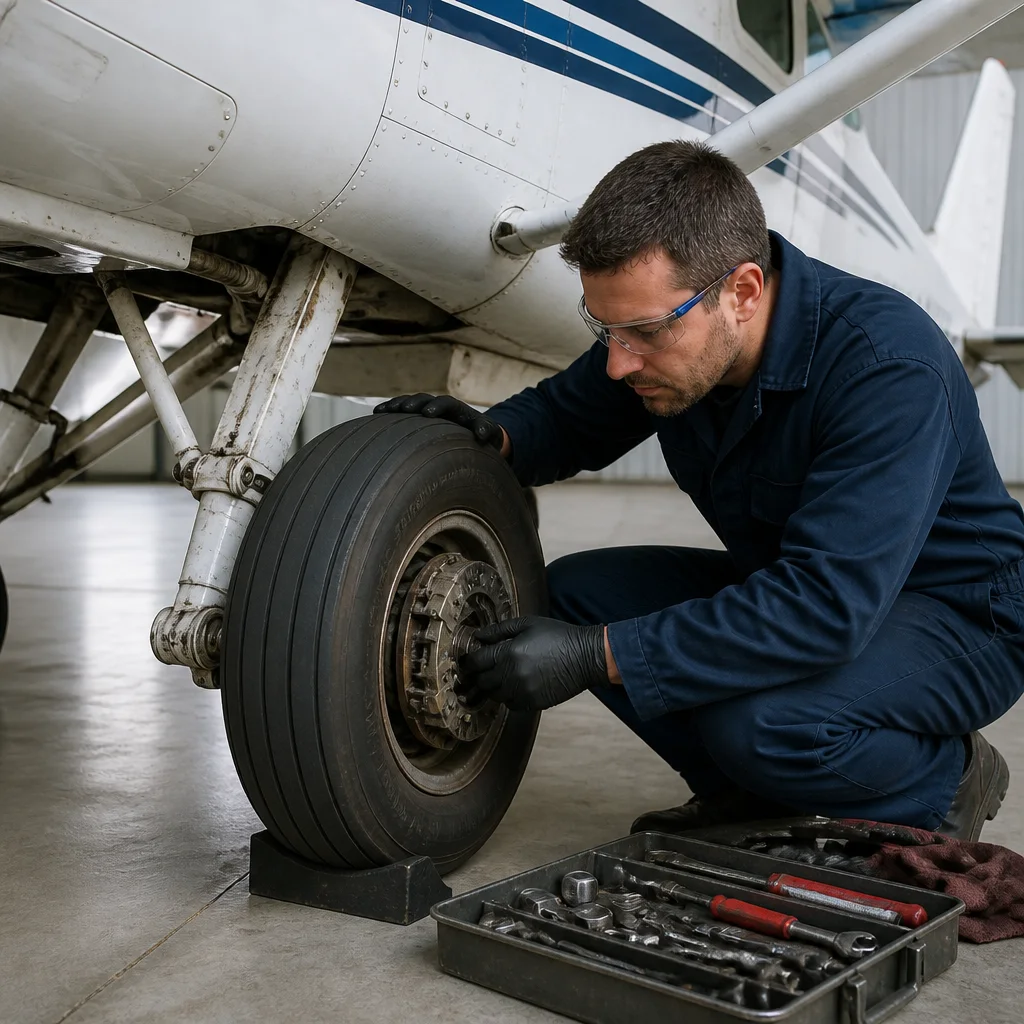
Brake & Tire Service

Wheel, tire and brake service discussions for aircraft owners operating at Van Nuys Airport.

Van Nuys Airport (KVNY) · Serving Van Nuys since 1989

01

Service considerations

Tire wear, flat spots, damage, brake condition and wheel-bearing service all deserve aircraft-specific attention. The correct inspection and replacement criteria depend on the installed components and manufacturer instructions.

02

A considered scope

We review the reported issue and service history, inspect relevant components and discuss the necessary work. Aircraft handling and parts availability are confirmed before an appointment; no safe-to-fly determination is made remotely.

03

What to have ready

Aircraft type, tire and brake configuration if known, recent symptoms and any prior wheel or brake work.

04

How the conversation starts

Share the aircraft identity, records and the issue or service you have in mind. The team will confirm whether the requested work is currently available and what review is needed.

05

A long maintenance history at Van Nuys

American Aviation says its maintenance operation is the oldest continuously operating aircraft-maintenance facility at Van Nuys Airport, with decades of experience and trust among local aircraft owners.

06

Maintenance pricing in Los Angeles, Burbank and Van Nuys

American Aviation aims to provide the lowest-cost aircraft maintenance in Los Angeles, Burbank and Van Nuys. This is the company's stated positioning, not an independent price survey. The actual estimate depends on aircraft, records, findings, parts, labor and the agreed work scope.

07

Brakes and tires under repeated use

High-cycle training aircraft can accumulate frequent taxi, takeoff and landing operations. A mechanic considers lining or pad wear as applicable, disc condition, hydraulic leaks, lines and hoses, master-cylinder or parking-brake components, tire tread and damage, wheel condition and bearings. Wear is evaluated against the installed parts and applicable guidance.

08

Pay attention to a changed feel

Uneven or dragging braking, a soft pedal, fluid evidence, unusual noise, vibration, cuts, flat spots, weather checking, exposed cord or abnormal tire wear merit timely attention. These descriptions are reasons to report a discrepancy, not instructions for diagnosing or operating the aircraft.

09

Wheel and tire configuration matters

Tube and tubeless installations, approved tire selection, wheel assembly and pressure considerations depend on the aircraft and installed equipment. Work and installation follow applicable maintenance information; FAA AC 43.13-1B includes general guidance in relevant circumstances and does not supersede controlling manufacturer data.

10

Check adjacent landing-gear items

A tire or brake concern may prompt examination of wheel attachment, bearings, gear condition and nearby lines or hardware. Any repair is scoped from findings, and the aircraft's records should reflect required maintenance work. Do not rely on a remote page to determine whether an aircraft can be operated.

The actual work scope, availability and estimate must be confirmed for the individual aircraft. An inspection or pre-purchase review is not a guarantee of airworthiness or future condition.

Regulatory references for aircraft owners

These links are reference material, not a determination of applicability to a particular aircraft. Current regulations, manufacturer instructions and aircraft-specific records control.

American Aviation · KVNY

Discuss your next step.

Availability, service scope and any estimate are confirmed directly. This page is informational, not a booking or work authorization.

Start a conversation